Facebook
 X
X
 Pinterest
 Copy Link
📈 Understanding What’s Really Moving Mortgage Rates (and Why This Moment Matters)
When mortgage rates jump, the first reaction is almost always the same: “The Fed did it again.”
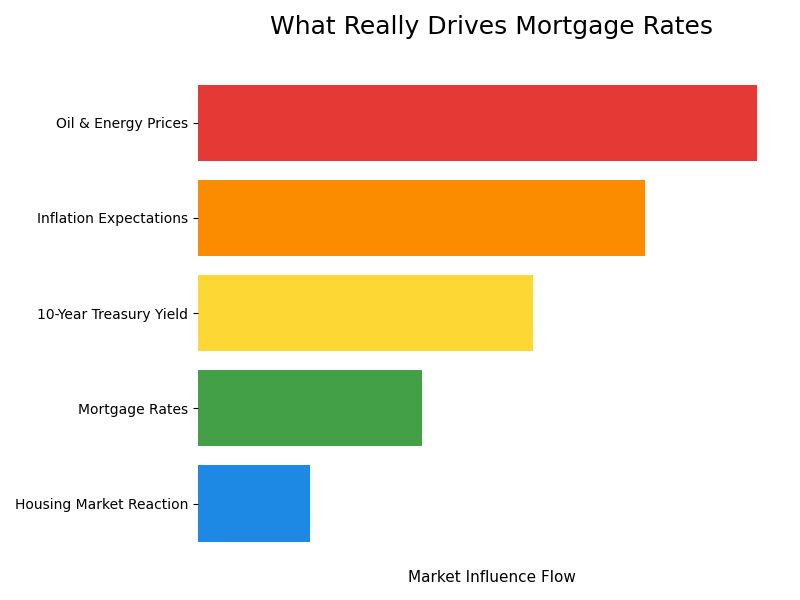
But just like this past week—when oil prices surged sharply—the recent rise in mortgage rates wasn’t driven by a Fed policy change or a long‑term shift. The real driver was energy prices and global events, and how financial markets react to them.
Here’s the key point most headlines miss:
Mortgage rates don’t follow the Fed directly. They follow the 10‑year Treasury.
And the 10‑year Treasury responds to inflation expectations.
Right now, those inflation expectations are being pushed higher primarily by rising oil and energy prices. When investors believe inflation may run hotter, they sell bonds. Bond prices fall, yields rise, and mortgage rates move up right behind them.
📉 Bonds down 📈 Yields up 📈 Mortgage rates follow
What the Market Is Doing Behind the Scenes
Whenever rates spike quickly, buyers tend to hold-off and pause. Hesitation sets in. Many buyers start to think that things are “getting worse” and decide to wait.
But here’s what’s actually happening beneath the surface:
- Housing inventory begins to build
- Homes sit on the market longer
- Sellers start adjusting expectations
- Buyer competition decreases
In other words, a new market ecosystem starts to form—one that quietly shifts leverage back toward prepared buyers.
🚪 Why This Rate Spike Is an Opportunity
This temporary rate movement may feel uncomfortable—but it’s often where opportunity lives.
Why? Because energy shocks tend to stabilize, not trend endlessly. When oil prices settle and inflation expectations cool, mortgage rates typically follow downward. And when that happens, buyers rush back in.
That’s when competition returns. Multiple offers. Shorter timelines. Less negotiating power.
Smart buyers don’t wait for rates to drop—they prepare while others pause.
Because when rates ease—even slightly—you can refinance, but you can’t renegotiate the purchase price you missed.
The Bottom Line
This isn’t about timing a perfect rate.
It’s about understanding why rates move, recognizing when market psychology shifts, and positioning yourself to act with confidence.
Waiting for headlines to turn positive often means arriving late. The volatile moments often create quiet value plays. It is the “Why refinancing later often beats waiting now?”
If you are thinking about buying but unsure how today’s rates impact your strategy? If you are noticing longer market times or shifting buyer behavior?
👉 Buyers: Let’s talk through your options and identify opportunities while competition is lower. Sellers: Let me help you get clarity on pricing, preparation, and how to stand out in a changing market.
Connect with me to explore strategic and off‑market opportunities.
Smart decisions aren’t made by waiting—they’re made by understanding the moment.
If you’re ready to navigate this market with clarity, I’m here to help.