Facebook
 X
X
 Pinterest
 Copy Link
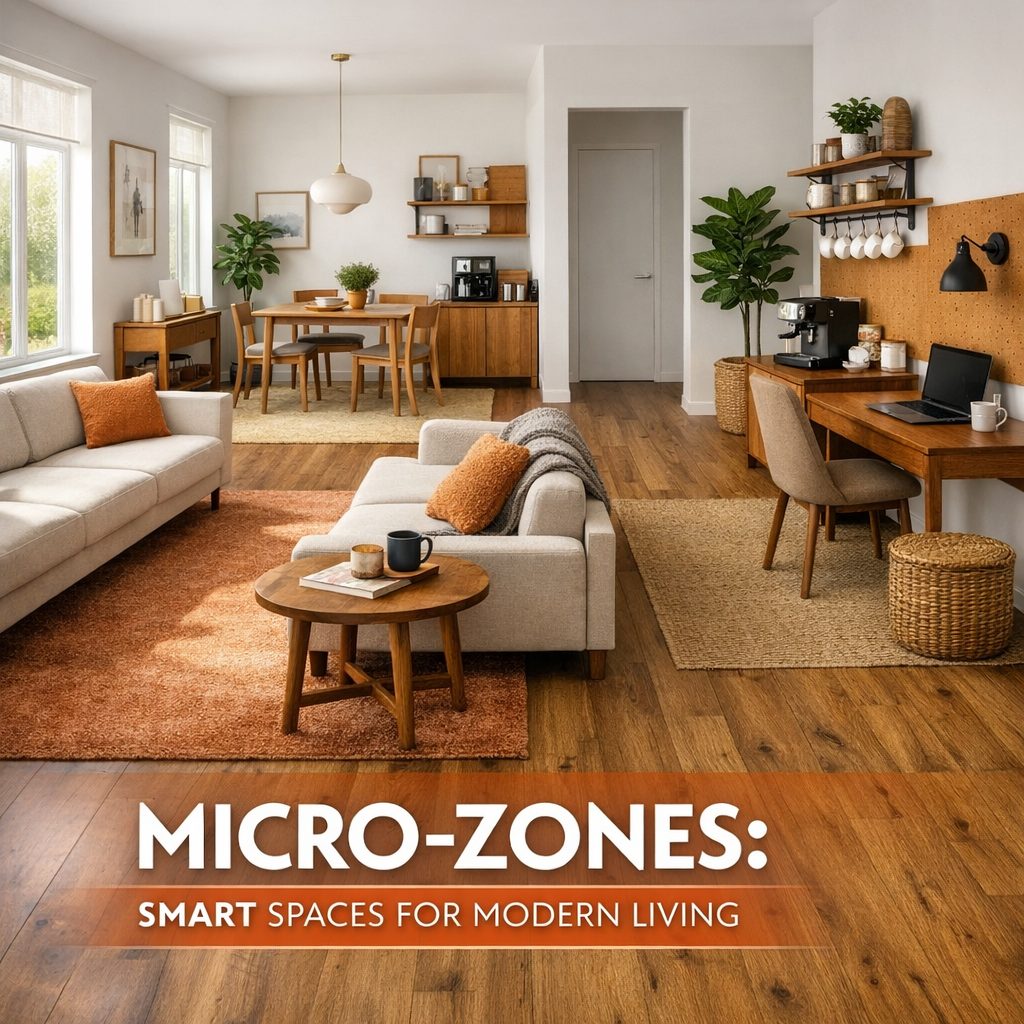
Open‑concept homes once ruled real estate. Bigger rooms, fewer walls, maximum openness. But today’s buyers want something different—spaces that work smarter, not just larger.
Now entering the micro‑zone design trend (also referred to as the micro‑zoning or micro comfort zones) – one of the most influential interior and lifestyle shifts of 2025–2026, especially in homes, small apartments, and hybrid live‑work spaces. Micro‑zoning breaks large spaces into small, purposeful zones that support real‑life living—without adding walls or costly renovations.
Whether you’re buying, selling, or prepping a home for market, or just keeping up wiht the trends in your own home, understanding micro‑zones can make a measurable difference.
What Are Micro Zones?
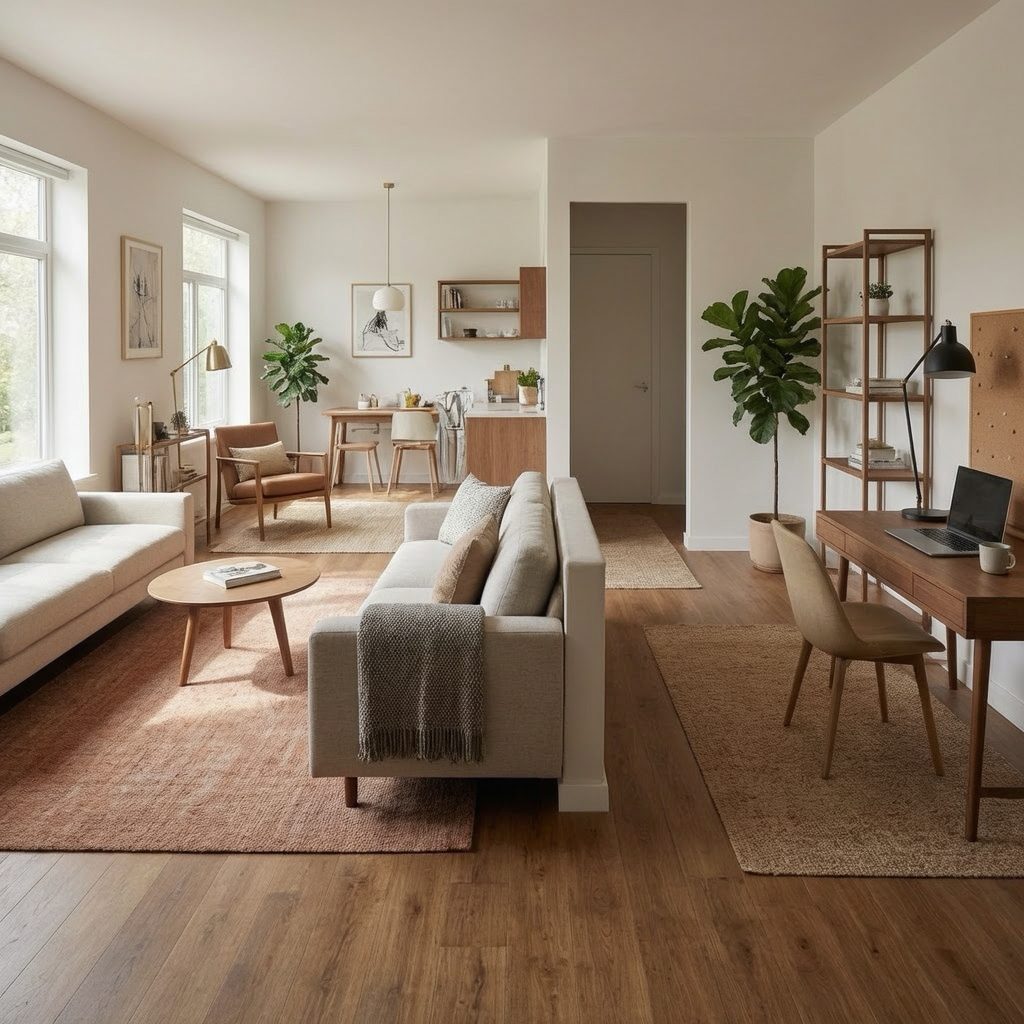
Micro zones are small, intentionally designed areas within a larger room space, each wcreated to serve a specific function—without adding walls. Instead of one room and space trying to do everything, the space is divided into purpose‑driven pockets using furniture, lighting, rugs, materials, and layout cues; with each area having a clear role—reading, working, relaxing, or gathering.
Think small focused areas in your home:
- A corner with a reading chair with its own lamp near a window
- A compact work‑from‑home nook behind the sofa
- A coffee station tucked into the kitchen corner
- A drop zone by the entry for daily essentials
Micro‑zones keep homes feeling open yet organized, flexible yet calm.
Why are Micro Zones Trending?
- Open‑concept fatigue: Homeowners want intimacy and function, not echoing multipurpose rooms.
- Work‑from‑home reality: Homes now support work, rest, socializing, and focus simultaneously.
- Smaller living footprints: Rising housing costs and urban living demand smarter layouts.
- Emotional design: Spaces are being designed around how people feel, not just how they look.
Top Micro‑Zone Design Trends
1. Purpose‑First Zones (Function Over Size)
Design starts by asking: What happens here?
- Each zone supports one primary activity, reducing visual and mental clutter. Examples:
- Reading nook
- Coffee or tea station
- Work‑from‑home pocket
- Morning routine zone
- Decompression corner
2. Visual Boundaries Instead of Walls
Micro zones help keep spaces open while feeling structured. They are defined using:
- Area rugs
- Pendant or task lighting
- Furniture placement (sofas, shelving, benches)
- Material shifts (wood → tile, paint → wallpaper)
3. Micro Comfort Zones (Emotion‑Driven Design)
A major 2026 shift is toward micro comfort zones—spaces that are designed to invite rest and pause rather than productivity. These zones support mental well‑being, especially in busy households.
Common features:
- Soft lighting
- Upholstered seating
- Warm wood tones
- Textiles like wool, linen, boucle
- Quiet corners near windows or transitions
4. Built‑In & Embedded Zones
Built‑ins make small spaces feel intentional and high‑end. Instead of adding furniture, designers are building zones into architecture:
- Window seats
- Under‑stair nooks
- Built‑in desks
- Banquettes
- Wall niches with lighting
5. Hybrid Work Micro Zones
Dedicated rooms aren’t necessary anymore. These zones support focus without dominating the home visually. Such as:
- Compact desk niches
- Fold‑down work surfaces
- Desk‑behind‑sofa layouts
- Bedroom work alcoves
6. Multi‑Sensory Zoning
The goal is to make each zone feel distinct in mood, not just layout. Designers now consider:
- Sound (acoustic panels, rugs, curtains)
- Light temperature (task vs ambient)
- Texture (soft vs structured)
- Scent and greenery
7. Micro Zones in Small Homes & Apartments
In compact spaces, micro‑zoning is critical. This approach makes spaces under 500–700 sq ft feel livable and personal. Example:
- One room = sleep, work, relax, host
- Furniture transforms across the day
- Vertical space is fully utilized
Some Popular Micro‑Zone Ideas by Room
Living Room
- Reading chair + lamp + small rug
- Desk tucked behind sofa
- Conversation corner
Kitchen
- Coffee/bar station
- Island perch for conversation
- Hidden prep zone
Bedroom
- Morning routine chair
- Dressing nook
- Fold‑out work zone
Entryway
- Drop zone (keys, bags, shoes)
- Bench + hooks + light
The Big Questions: Why does This Trend Matter?
For real estate, Micro‑zoned homes:
- Feel more functional during showings
- Photograph better
- Highlight flexibility
- Appeal to modern buyers who value lifestyle over square footage
Designers and agents alike are using micro‑zones to show how homes actually live, not just how they look.
====================================================================================================
Buyers: Why Do You Love Micro‑Zoned Homes/Trends?
1. Homes Feel More Functional
Buyers aren’t just purchasing square footage—they’re buying how the home supports their daily life. Micro‑zones help buyers instantly understand how they’ll use the space.
Instead of imagining where things might go, buyers can see it:
- Where they’ll work
- Where they’ll unwind
- Where routines naturally happen
2. Small Homes Feel Larger
Smart zoning makes even modest homes feel intentional and adaptable. Buyers walking through smaller properties often say,
“This feels bigger than I expected.” That’s the power of micro‑zoning.
3. Work‑From‑Home Flexibility
Dedicated offices aren’t always realistic. Micro‑zones show buyers that a home can support productivity without sacrificing aesthetics or bedroom space.
Sellers: Why Should You Use Micro‑Zones (Even Before Listing)
1. Better Photos & Showings
Micro‑zoned homes photograph better because every space:
- Has a purpose
- Feels styled, not cluttered
- Feels livable and modern
Online buyers decide within seconds whether to book a showing. Micro‑zones help make those seconds count.
2. Clear Value Without Renovation
Unlike major remodels, micro‑zoning:
- Costs little
- Happens quickly
- Relies on furniture, rugs, lighting, and layout
You’re not changing the home—you’re revealing its potential.
3. Stronger Emotional Connection
Buyers don’t fall in love with empty rooms. They fall in love with moments:
- Morning coffee by the window
- Quiet reading time
- A peaceful work corner
Micro‑zones create those moments.